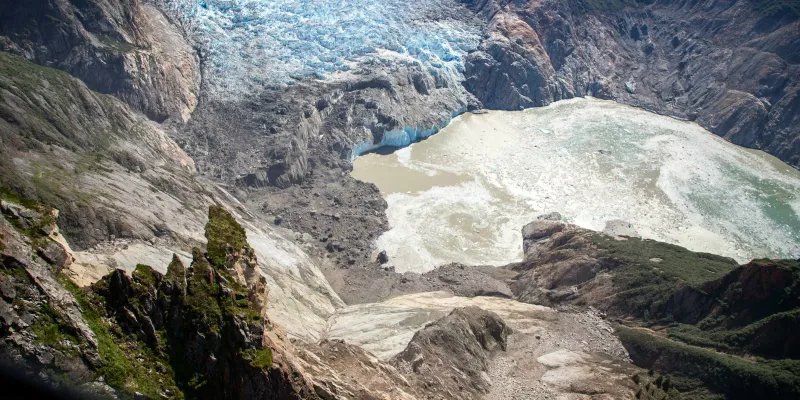
An unprecedented geological event occurred on August 9, 2025, in Alaska's Glacier Bay National Park, when a massive landslide triggered a colossal tsunami, reaching an astonishing height of 1,580 feet up the fjord walls. This event, which unfolded approximately twelve hours after a cruise ship, the Hanse Explorer, had passed through the area, has been classified as the second-highest tsunami ever recorded. The incident began on the evening of August 9th, as passengers aboard the Hanse Explorer were enjoying the scenic beauty of the South Sawyer Glacier, capturing memories through photos and videos. The ship then proceeded to navigate back down the fjord.
However, the tranquility was shattered twelve hours later when a substantial landslide occurred on an adjacent mountain. The sheer volume of rock and debris that collapsed into the fjord generated an immense wave. This wave, a direct consequence of the rapid displacement of water by the landslide, surged upwards with terrifying force, scaling the steep walls of the fjord to a height that has left scientists astounded. The magnitude of this tsunami is second only to the Lituya Bay landslide of 1958, which generated a wave of approximately 1,720 feet. The dramatic scale of the 2025 event underscores the immense power of natural forces and the potential for catastrophic geological events in seismically active regions like Alaska. Researchers are now meticulously studying the data collected from the incident to better understand the complex interplay of factors that led to such a devastating tsunami. This includes analyzing the landslide's volume, speed, and the fjord's topography. The findings are expected to contribute significantly to improving tsunami warning systems and hazard assessments in similar environments worldwide.
Alaska's near-record landslide tsunami sent a wave 1,580 feet up the fjord walls
Admin
2 Views
2 min read
Source:
Phys.org