The article, titled "An open letter to the dismissive: Reparations and the cost of historical injustice," published by the African News Agency, presents a forceful and unapologetic argument for reparations. It directly addresses a specific group of individuals and entities deemed to be obstructing or dismissing the concept of reparations for historical injustices. These include politicians, media figures described as "mercenaries," think-tank representatives, Black conservatives positioned as "shields," and those who benefit from "stolen generational wealth." The author asserts that this group has appointed themselves as the ultimate judges of what justice entails for the exploited, and that "we see you. We have always seen you." The tone is one of defiance and a rejection of politeness in discussing this issue, signaling a shift towards direct confrontation.
The core of the argument lies in the recognition of historical injustice and its ongoing economic and social consequences. The author implies that the dismissiveness towards reparations is a deliberate attempt to evade accountability for past exploitation, particularly the systemic dispossession and subjugation of Black people. The mention of "stolen generational wealth" directly points to the economic disparities that have resulted from slavery, Jim Crow laws, and other discriminatory practices. These injustices, the letter argues, have created a legacy of disadvantage that continues to affect present generations.
The article's strong language, such as "media mercenaries" and "deployed as shields," suggests a perception of deliberate manipulation and obfuscation by those who oppose reparations. The inclusion of "Black conservatives" in this critique indicates a nuanced understanding of the debate, acknowledging that opposition to reparations can come from within the Black community itself, often utilized to undermine the broader movement. The author frames these individuals not as genuine opponents but as tools or shields for the dominant powers that benefit from the status quo.
The piece highlights the recurring nature of this dismissal whenever reparations are seriously considered in political discourse. This implies a pattern of resistance that resurfaces with each push for meaningful change. The declaration "We’re done being polite about this" signifies a growing impatience and a demand for direct engagement with the moral and economic imperative of reparations. It suggests that polite discourse has failed to yield progress and that a more assertive approach is now necessary to force a reckoning with historical wrongs and their enduring impact.
An open letter to the dismissive: Reparations and the cost of historical injustice
Admin
Apr 13, 2026
1 Views
2 min read
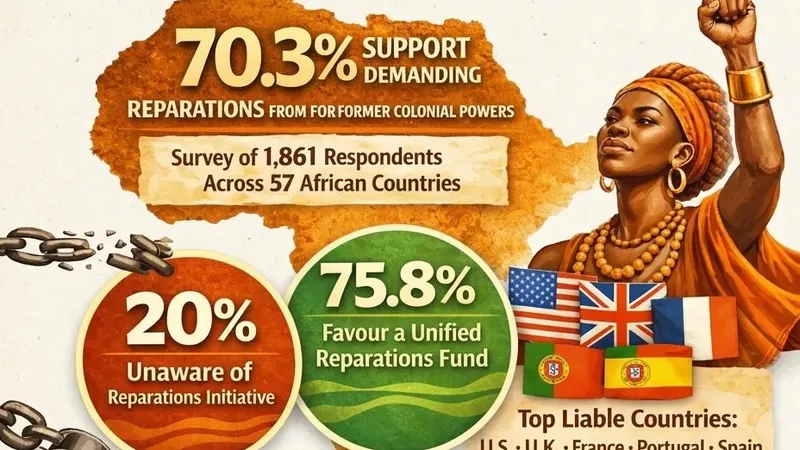
Source:
African News Agency