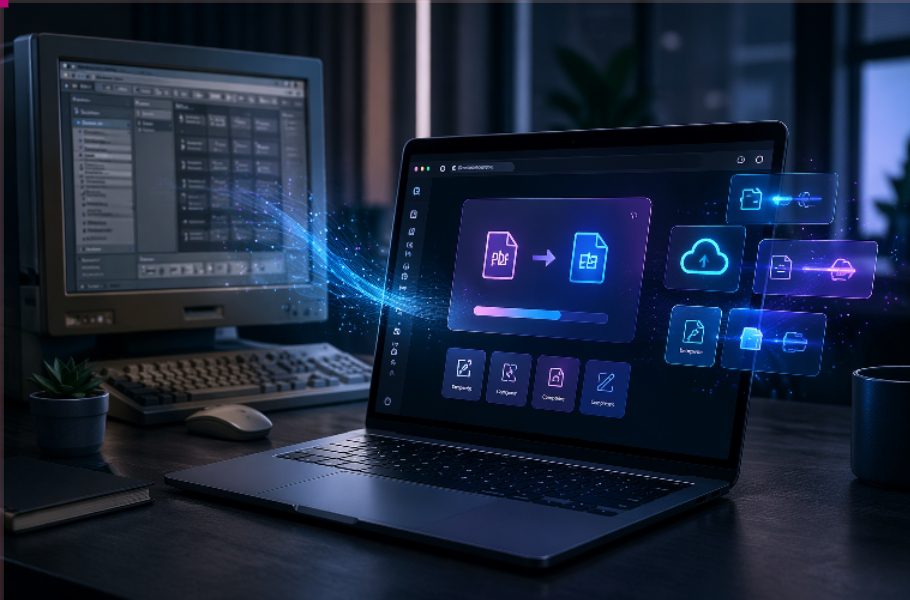
Software interaction patterns are undergoing a fundamental transformation in 2026, with web applications increasingly replacing traditional desktop software. Browser-based file conversion tools exemplify this shift, offering users instant access to powerful functionality without installation, updates, or device-specific configuration requirements.
The transition from desktop to browser-based applications reflects several converging trends in technology and user behavior. Users increasingly demand immediate access to tools, minimal friction in workflows, and flexibility across devices. Browser-based applications deliver precisely these benefits, operating seamlessly across Windows, Mac, Linux, and mobile platforms without requiring separate installations.
File conversion remains one of the most commonly needed tasks for both professionals and casual users. Historically, this functionality required installing specialized software, managing updates, and maintaining compatibility with various file formats. Browser-based conversion tools have eliminated these barriers, providing instant access through simple file uploads and immediate downloads of converted files.
The advantages of web applications extend beyond convenience. They address security concerns by eliminating the need to download and execute potentially risky files. Files are processed on secure servers with encryption protection, and users maintain control over their data without installing software on their devices. This architecture also ensures that tools remain current with the latest features and security patches automatically.
The critical distinction between web applications and desktop applications has become increasingly nuanced. Modern web applications now offer performance levels previously associated only with desktop software, powered by advances in browser technology and cloud computing infrastructure. These applications can handle complex operations, process large files, and provide sophisticated features comparable to traditional desktop tools.
From a user perspective, the browser-based model eliminates numerous pain points. No installation process means users can access tools immediately. No version management means no confusion about software versions or incompatibility issues. No storage consumption means devices maintain more available memory. This simplification has accelerated adoption, particularly among users who value efficiency and straightforward workflows.
Business implications of this shift are substantial. Organizations benefit from reduced IT support costs, simplified deployment across multiple users, and guaranteed access to current tool versions. Employee productivity increases when professionals can access needed tools instantly rather than waiting for installation processes.
The rise of browser-based tools also democratizes access to professional-grade functionality. Users who previously lacked resources to purchase expensive desktop software can now access equivalent features freely or at minimal cost through browser applications. This democratization extends opportunities across economic and geographic boundaries.
As 2026 progresses, the browser-based tool ecosystem continues expanding. While desktop applications maintain relevance for specialized tasks requiring maximum performance, web applications increasingly dominate everyday productivity needs. File conversion exemplifies this trend—what once required software purchases and IT support now requires only a browser and an internet connection.
Browser-Based File Conversion Tools Reshape Software Landscape in 2026
Admin
Apr 11, 2026
1 Views
3 min read
Source:
Techbullion