The capabilities of Large Language Models (LLMs) are constantly being pushed, and one of the latest frontiers being explored is their ability to generate code in obscure or legacy programming languages. In a recent experiment, a user named [Ready Z80] set out to see if Claude, a prominent LLM developed by Anthropic, could produce functional Z80 assembly code. Z80 assembly is a low-level programming language used for the Zilog Z80 microprocessor, which was popular in the late 1970s and 1980s, powering many home computers and arcade games. Given the niche nature and complexity of assembly programming, this was a significant challenge.
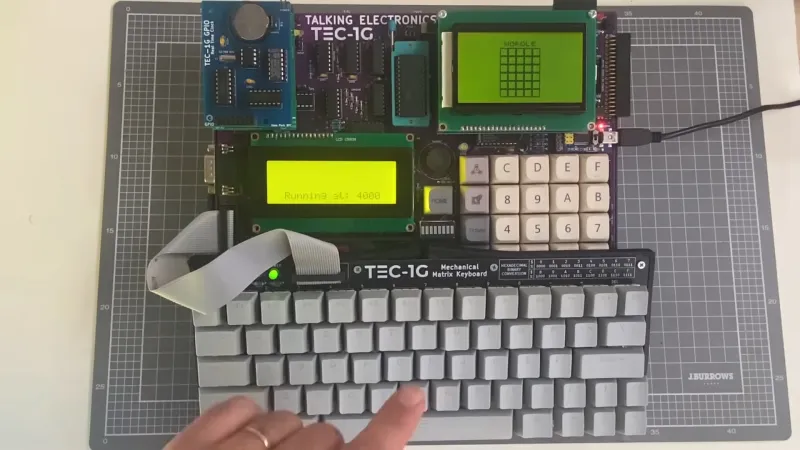
According to the report on Hackaday, the initial results were not entirely seamless. The article humorously references Betteridge's Law of Headlines, which states that "any headline that ends in a question mark can be answered by the word no." However, in this instance, the law was only partially applicable. While Claude didn't spontaneously generate perfect Z80 code without any input, with the crucial assistance and expert guidance of [Ready Z80], the LLM was indeed able to produce a working game of Wordle. This outcome surpassed the user's initial expectations, highlighting the potential of LLMs when paired with human expertise.
The process likely involved [Ready Z80] providing detailed prompts, examples, and iterative feedback to Claude. Generating assembly code requires a deep understanding of the target architecture, including its instruction set, registers, memory addressing modes, and timing. LLMs, while powerful, often benefit from structured input and correction to navigate such intricate technical domains. The success in creating a functional game suggests that Claude can grasp the fundamental logic and syntax of Z80 assembly, even if it requires significant human scaffolding. This experiment opens up interesting possibilities for preserving and even revitalizing older software projects, or for educational purposes, allowing aspiring programmers to interact with and learn from legacy systems through the aid of modern AI.
Can Claude Write Z80 Assembly Code?
Admin
1 Views
2 min read
Source:
Hackaday