Caught in the crosshairs: China’s pushback against US sanctions signals tougher era for global business
Admin
2 Views
2 min read
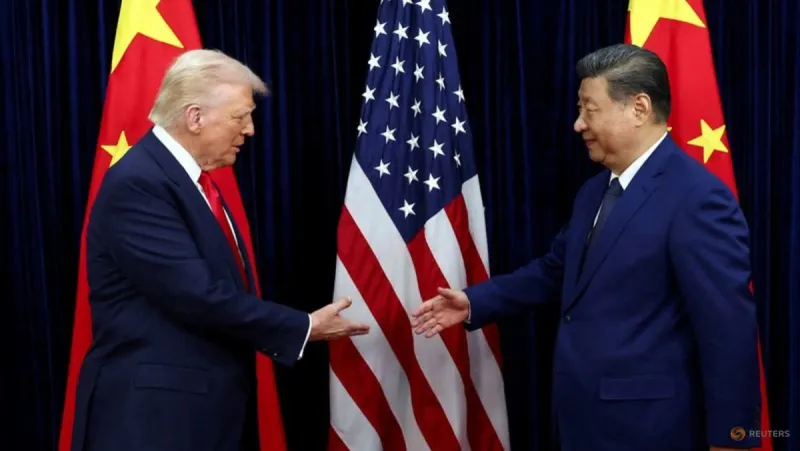
China's recent invocation of its "Blocking Rules" for the first time marks a significant escalation in its response to US sanctions, signaling a new and more challenging era for global businesses. This move represents a concrete shift from mere rhetorical opposition to active enforcement, creating a complex legal and operational landscape for companies operating across these two major economies. The "Blocking Rules," introduced in 2021, empower Chinese authorities to prohibit Chinese citizens and entities from complying with foreign laws and measures that China deems to infringe upon its sovereignty or security. By applying these rules in response to US sanctions, China is effectively drawing a line in the sand, forcing international companies to navigate a difficult choice: comply with US sanctions and risk repercussions from Beijing, or adhere to Chinese directives and face penalties from Washington. This creates a "caught in the crosshairs" scenario, where businesses are caught between conflicting legal jurisdictions and potentially irreconcilable demands. The implications for global trade and investment are profound. Companies may find themselves re-evaluating their supply chains, investment strategies, and market presence, potentially leading to a fragmentation of the global economy. Sectors heavily reliant on cross-border trade and technology transfer, such as semiconductors, telecommunications, and advanced manufacturing, are particularly vulnerable. The move also highlights the increasing politicization of international commerce, where economic policies are increasingly being used as tools in geopolitical rivalries. The United States has been employing sanctions aggressively as a foreign policy instrument, targeting various countries and entities for a range of reasons. China's counter-measure suggests a growing willingness to push back and defend its interests through similar means. This tit-for-tat approach could lead to a sustained period of increased friction and uncertainty in international business relations, making long-term planning and investment significantly more challenging for multinational corporations. The global business community will be closely watching how this dynamic evolves and what further measures both nations might take.
Source:
CNA