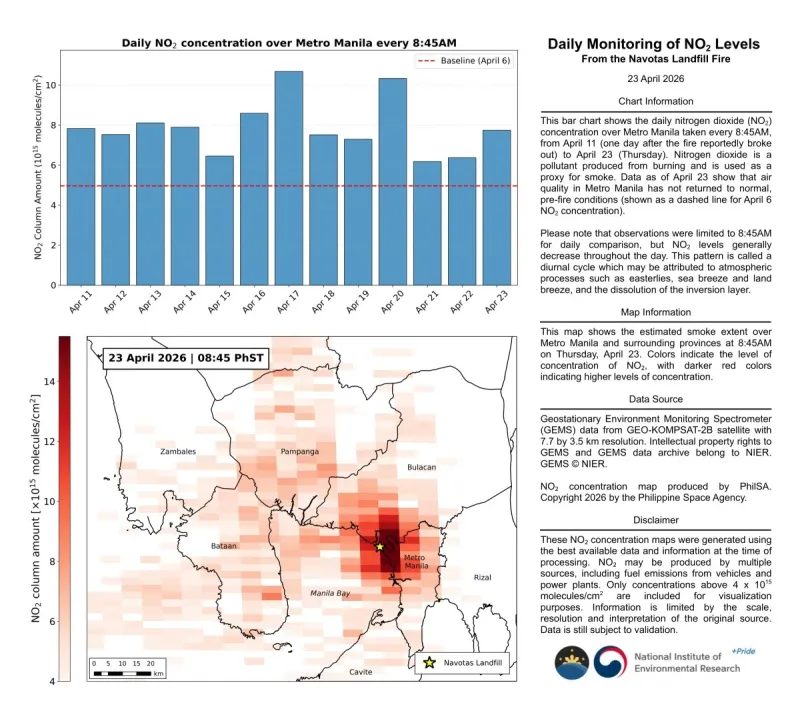
The air quality in Metro Manila continues to be a significant concern, with daily monitoring of satellite data revealing that levels have not yet returned to normal following the devastating Navotas landfill fire. The Philippine Space Agency (PhilSA) has been diligently tracking atmospheric conditions since the blaze reportedly ignited on April 10, 2026. The ongoing analysis of satellite imagery provides a crucial, albeit concerning, picture of the persistent pollution affecting the densely populated metropolitan area.
The initial reports of the landfill fire painted a grim picture, and the subsequent satellite data confirms the widespread and lingering impact of the smoke and particulate matter released into the atmosphere. PhilSA's commitment to daily monitoring underscores the severity of the situation and the need for continuous assessment. This data is invaluable for understanding the extent of the environmental damage and for informing public health advisories.
The implications of prolonged poor air quality are far-reaching. Residents of Metro Manila are likely experiencing increased respiratory issues, and the long-term health consequences for vulnerable populations, such as children and the elderly, are a major worry. Beyond public health, the economic impact can also be substantial, affecting productivity and potentially leading to increased healthcare costs.
The satellite data allows experts to identify the spatial distribution of pollutants and track their movement. This information is vital for pinpointing the most affected areas and for understanding the atmospheric dynamics that are preventing a swift return to normal air quality. Factors such as wind patterns, temperature inversions, and the sheer volume of burning material at the landfill likely contribute to the persistence of the pollution.
While the exact timeline for a full recovery of air quality remains uncertain, the continuous monitoring by PhilSA provides essential data for government agencies and environmental organizations. This information will be critical in developing and implementing effective mitigation strategies, including public health interventions, waste management improvements, and potentially longer-term environmental restoration efforts. The situation serves as a stark reminder of the environmental vulnerabilities faced by urban centers and the importance of robust monitoring systems in place to address such crises.
Daily monitoring of satellite data shows air quality in Metro Manila has not returned to normal levels
Admin
1 Views
2 min read
Source:
Manila Bulletin