Enhancing Underground Mining Images with Transformer Network
Admin
1 Views
2 min read
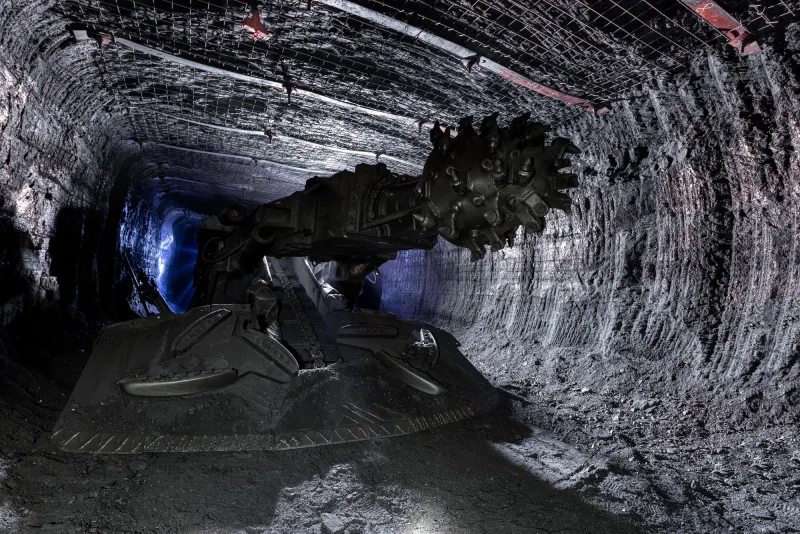
The advancement of artificial intelligence, particularly in the field of computer vision, is paving the way for significant improvements in traditionally challenging industries. One such area is underground mining, where visibility can be severely limited due to dust, poor lighting, and the general ruggedness of the environment. To address these issues and enhance safety and efficiency, a new transformer-based super-resolution network named BDL has been developed. This innovative technology focuses on improving the quality of degraded images captured in coal mine environments. Degraded images in mining can be a serious impediment to operations. They can obscure critical details, making it difficult for human operators or autonomous systems to accurately assess their surroundings, identify potential hazards, or navigate complex subterranean landscapes. The use of super-resolution techniques, powered by advanced AI architectures like transformers, aims to overcome these limitations by intelligently reconstructing high-resolution details from low-resolution or noisy input images. Transformer networks, originally prominent in natural language processing, have shown remarkable capabilities in image processing tasks. Their ability to capture long-range dependencies and contextual information within data makes them particularly well-suited for tasks like super-resolution, where understanding the broader image structure is crucial for accurate detail enhancement. BDL's application in coal mines is directly linked to the growing trend of autonomous mining operations. As mines increasingly rely on robots and AI-powered systems for exploration, extraction, and safety monitoring, the quality of visual data becomes paramount. By enhancing the clarity and detail of images, BDL can significantly improve the perception capabilities of these autonomous systems, leading to more precise navigation, better hazard detection, and ultimately, safer working conditions. The development of BDL represents a crucial step forward in leveraging AI to solve real-world problems in industrial settings. Its ability to enhance degraded images in such a demanding environment underscores the transformative potential of deep learning technologies in making dangerous professions safer and more efficient.
Source:
AZoMining