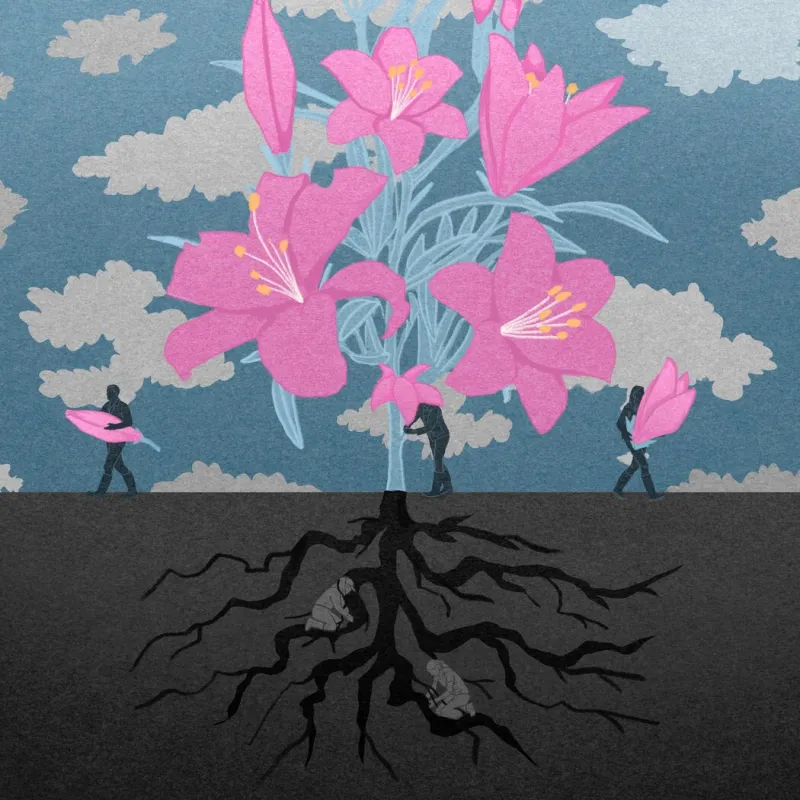
The European flower industry, a multi-billion dollar sector, is built upon a foundation that disproportionately benefits Western companies while leaving developing nations with little to show for their contributions. An investigation by Follow the Money has unearthed a system that, despite the existence of a global UN treaty designed to ensure equitable benefit-sharing, continues to operate in a manner reminiscent of colonial exploitation. The treaty, the Nagoya Protocol on Access to Genetic Resources and the Fair and Equitable Sharing of Benefits Arising from their Utilization, was intended to provide a framework for countries to control their genetic resources and receive fair compensation when these resources are used for commercial purposes. However, the investigation reveals that many Western companies have found ways to circumvent its provisions, effectively continuing to extract valuable genetic material from developing nations without adequate remuneration.
The core of the issue lies in the origin of many popular flower varieties. These flowers, often bred for their vibrant colors, unique scents, or resilience, can trace their genetic lineage back to diverse ecosystems in developing countries. These nations, rich in biodiversity, are the custodians of these genetic resources. Yet, the economic benefits derived from the commercialization of these flowers, such as in the vast European cut flower market, largely flow back to European breeders and distributors. The farmers and communities in the countries of origin, who are the guardians of this biodiversity, often see little to no financial return.
Follow the Money's investigation highlights specific instances where loopholes in international law and weak enforcement mechanisms have allowed companies to profit immensely. This can involve claiming ownership of traits that are naturally occurring or have been developed over generations by local communities, without proper acknowledgment or compensation. The disparity is stark: billions of dollars generated in the European market, while the source countries, often grappling with economic challenges, receive negligible benefits. This situation perpetuates an imbalance, where the knowledge and resources of the Global South are utilized for the enrichment of the Global North, mirroring historical colonial patterns. The report calls for a strengthening of the Nagoya Protocol's implementation and enforcement, urging for greater transparency and accountability from the companies involved, and advocating for a more just and equitable system that recognizes the true value of biodiversity and the rights of its custodians.
Europe’s flower industry keeps a colonial system blooming
Admin
2 Views
2 min read