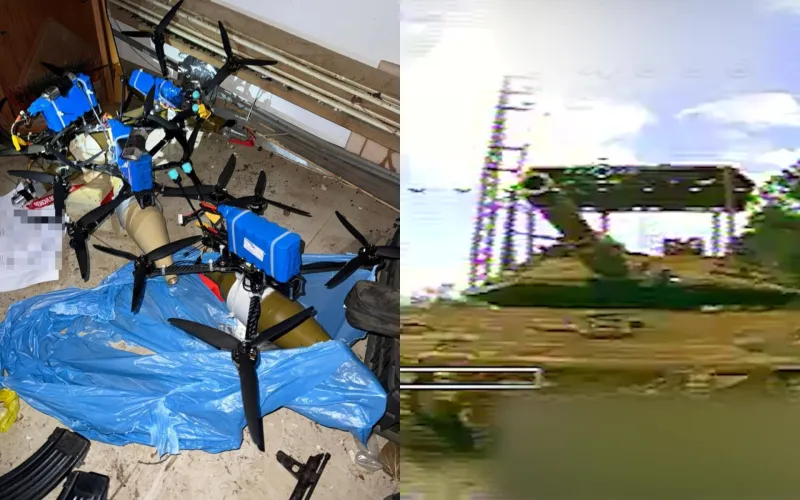
A recent fatal attack by Hezbollah, employing first-person view (FPV) drones guided by fiber optic cables, has starkly illuminated significant deficiencies in the Israel Defense Forces' (IDF) preparedness against this increasingly sophisticated threat. Unlike conventional drones that rely on radio frequencies for control, these FPV drones are directed via a physical fiber optic cable, rendering standard electronic jamming countermeasures ineffective. The gravity of the situation is underscored by the fact that Israel reportedly only initiated a serious investigation into solutions for this specific type of drone during the current conflict, a delay that has proven costly.
The effectiveness of FPV drones lies in their ability to be flown with extreme precision, often by operators who see through the drone's camera in real-time, providing an immersive and highly accurate piloting experience. When equipped with explosives, these drones become potent aerial weapons capable of delivering payloads with pinpoint accuracy. The fiber optic cable, while limiting the drone's range compared to radio-controlled counterparts, offers a highly secure and uninterrupted communication link, making them difficult to disrupt. This dual advantage—precision piloting and immunity to electronic jamming—presents a formidable challenge for air defense systems that are not specifically designed to counter them.
The IDF's apparent lack of a robust defense strategy against these specific drones is a cause for significant concern. While the military has extensive experience in dealing with aerial threats, the evolution of drone technology, particularly the emergence of FPV variants with unique guidance systems, necessitates continuous adaptation and innovation in defense capabilities. The fact that the search for solutions began only in the midst of the ongoing war suggests a reactive rather than proactive approach to threat assessment and mitigation. This reactive posture could have severe implications, potentially allowing adversaries to exploit these vulnerabilities with devastating effect.
Experts in defense and security have voiced concerns about the implications of this technological gap. They emphasize the need for rapid development and deployment of countermeasures, which could include specialized interceptor systems, enhanced surveillance capabilities to detect the drones and their operators, or even the development of counter-drone technologies that can physically neutralize them. The incident serves as a critical wake-up call, highlighting the imperative for military forces worldwide to stay ahead of rapidly evolving threats, especially in the realm of unmanned aerial systems. The IDF, in particular, faces the urgent task of closing this preparedness gap to ensure the safety of its personnel and the security of its operations against a continuously innovating adversary.
Fatal Hezbollah attack exposes gaps in IDF preparedness for first-person view drones
Admin
2 Views
3 min read
Source:
The Times of Israel