From scientist to silk farmer: India's silk industry renewal
Admin
1 Views
2 min read
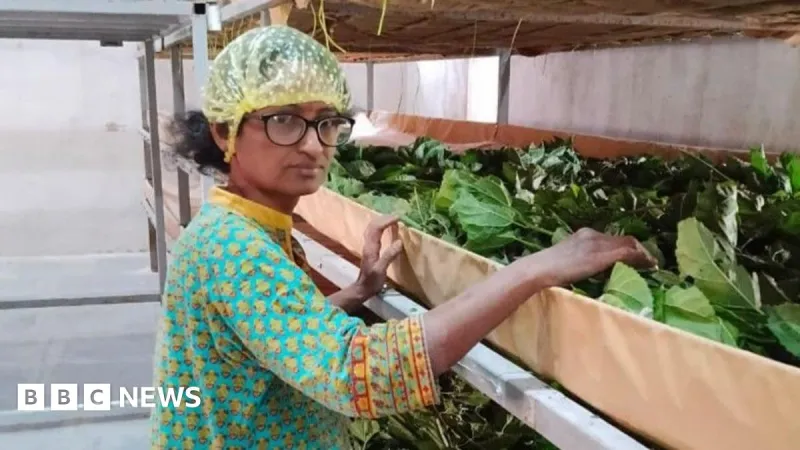
India's traditional silk industry, renowned for its rich heritage and intricate craftsmanship, is undergoing a significant transformation, moving from age-old practices to embracing advanced technology. This renewal is spearheaded by individuals like former scientists who are now venturing into sericulture, bringing a new level of expertise and innovation to the field. The article highlights how silk production in India is becoming an increasingly high-tech business. This shift is not just about modernizing machinery; it encompasses a broader integration of scientific principles and technological advancements across the entire value chain, from mulberry cultivation to silk reeling and weaving. For instance, in mulberry farming, which forms the foundation of sericulture, scientific approaches are being employed to optimize crop yields and quality. This includes advanced soil analysis, precision irrigation techniques, and the development of disease-resistant mulberry varieties through biotechnology. The traditional methods of silkworm rearing are also being enhanced with technology. Controlled environments using climate-monitoring systems ensure optimal temperature, humidity, and ventilation, leading to healthier silkworms and higher quality cocoons. Automation is being introduced in various stages, such as feeding and disease detection, reducing human error and improving efficiency. Furthermore, advancements in silk reeling technology are enabling the production of finer and stronger silk yarns. This involves sophisticated machinery that can handle delicate silk threads with precision, minimizing breakage and ensuring uniformity. In the weaving and processing stages, digital looms and advanced dyeing techniques are being adopted. These technologies allow for greater design complexity, faster production cycles, and more sustainable dyeing processes that reduce water consumption and chemical waste. The article suggests that the transition to high-tech silk production is not only improving the quality and quantity of silk produced but also enhancing its competitiveness in the global market. By adopting scientific methods and advanced technologies, Indian silk producers can meet international standards, cater to evolving consumer demands for sustainable and ethically produced goods, and command better prices. The involvement of scientists in this sector signifies a crucial infusion of knowledge and a commitment to research and development, which are essential for long-term growth and sustainability. This transformation represents a promising future for India's silk industry, blending its traditional artistry with the power of modern innovation.
Source:
BBC