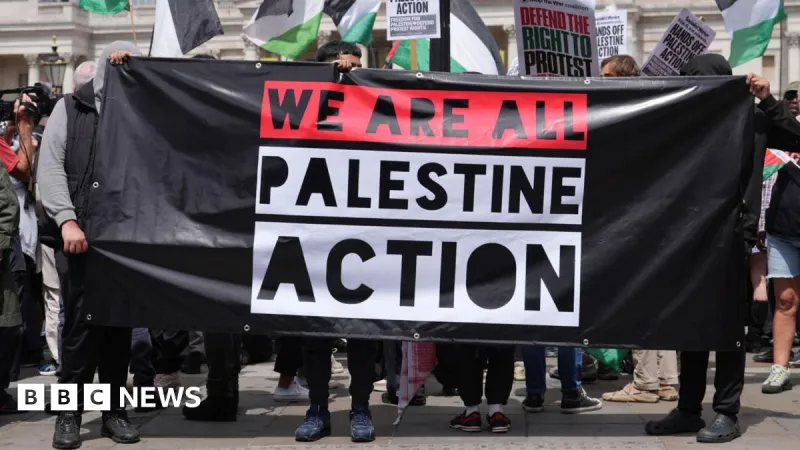
The UK government is standing by its decision to ban the activist group Palestine Action, despite a recent High Court ruling that declared the ban unlawful. The government's defense of the ban hinges on its assertion that overturning the ruling would significantly curtail the powers available to ministers in their counter-terrorism efforts. This legal battle highlights the ongoing tension between civil liberties and national security concerns, particularly in the context of protest movements.
Palestine Action is a group known for its direct-action protests against companies it accuses of being complicit in the Israeli occupation of Palestinian territories. Their tactics have often involved disrupting business operations, including targeting businesses perceived to have ties to arms manufacturers supplying Israel. The government's decision to ban the group under counter-terrorism legislation was met with widespread condemnation from civil liberties organizations and pro-Palestinian activists, who argued that it was an overreach and a suppression of legitimate protest.
The High Court's ruling that the ban was unlawful represents a significant victory for Palestine Action and its supporters. The court's decision likely centered on the legal basis for the ban, questioning whether the group's activities genuinely constituted a threat that warranted such severe measures under counter-terrorism laws. The ruling suggests that the government may have failed to meet the legal threshold required to justify the ban, potentially misapplying or overstretching counter-terrorism powers.
However, the government's immediate response to defend the ban indicates its intent to challenge the High Court's decision or to seek alternative means to restrict the group's activities. The argument that overturning the ruling would limit counter-terrorism powers suggests a broader concern about the precedent this case might set. Ministers may fear that a successful challenge to this ban could embolden other activist groups and make it more difficult to use counter-terrorism legislation to suppress perceived threats, even if those threats are related to protest actions.
This situation raises important questions about the definition and application of counter-terrorism powers. Critics argue that such powers are increasingly being used to stifle dissent and target political opposition, rather than solely focusing on genuine security threats. The government's stance underscores its commitment to using all available legal tools to maintain order and security, while proponents of civil liberties emphasize the importance of protecting the right to protest and freedom of expression. The legal and political ramifications of this case are likely to unfold further as the government decides on its next steps.
Government defends Palestine Action ban after High Court ruled it unlawful
Admin
1 Views
3 min read
Source:
BBC