How invading cancer cells grip and rip their way into new tissues
Admin
1 Views
2 min read
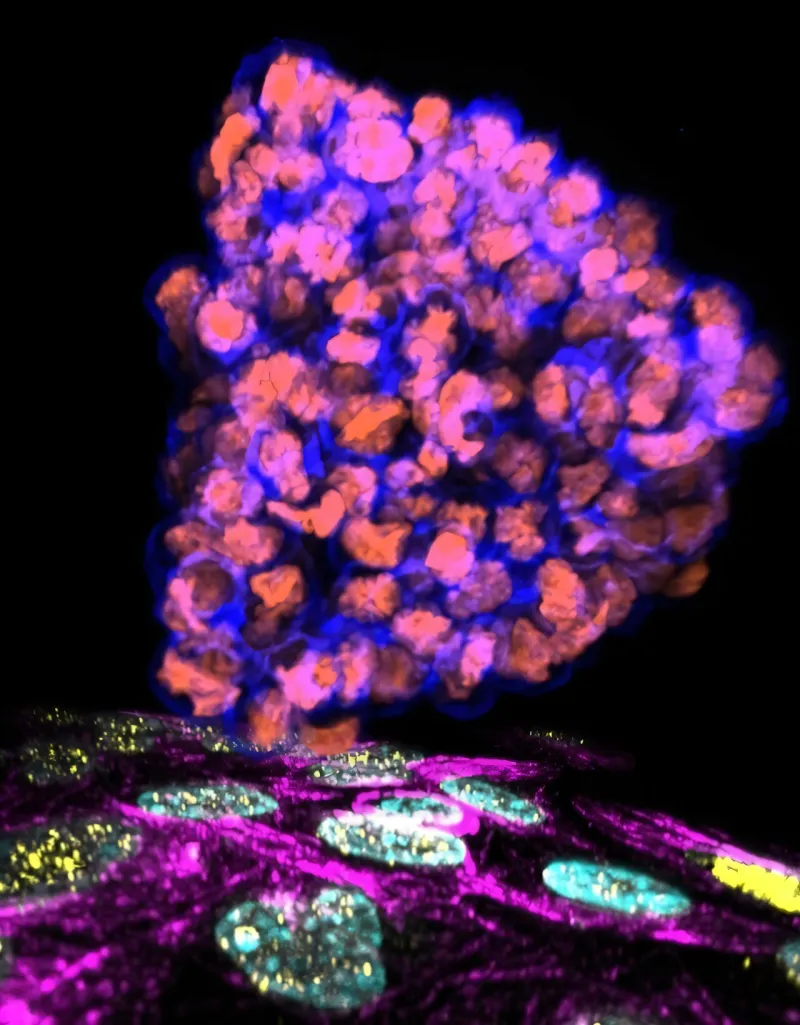
A groundbreaking discovery by researchers at the National University of Singapore (NUS) has shed new light on the aggressive nature of cancer metastasis, revealing a previously unknown mechanism by which cancer cells invade surrounding tissues. Contrary to the long-held belief that cancer cells simply exert force to push their way through, the NUS team has found that these cells actively 'grip' and 'rip' their way into new areas. This fundamentally new understanding of cancer invasion could pave the way for novel therapeutic strategies aimed at halting the spread of the disease. The research, published in a prominent scientific journal, details how cancer cells utilize specific molecular structures to latch onto the protective barriers that normally compartmentalize tissues. These barriers, often composed of complex extracellular matrix proteins and cellular junctions, act as a crucial defense mechanism against the uncontrolled proliferation and movement of abnormal cells. However, the NUS study demonstrates that invading cancer cells have evolved a sophisticated method to overcome these defenses. Instead of brute force, they employ a more insidious approach: they establish strong physical connections with the barrier components. Once anchored, the cancer cells then apply a pulling force, effectively tearing apart the tissue structure. This 'grip and rip' mechanism is a significant departure from previous models of cancer invasion, which primarily focused on the migratory and invasive capabilities of individual cells or their ability to degrade the surrounding matrix. The identification of this active gripping and pulling action highlights the dynamic and mechanical nature of cancer cell movement. This discovery has profound implications for cancer treatment. Current therapies often target the rapid proliferation of cancer cells or aim to inhibit their ability to break down tissue. However, if cancer cells are actively manipulating and tearing apart tissue barriers, then new therapeutic interventions could be developed to specifically disrupt this gripping and ripping process. This might involve targeting the molecular 'grippers' on the cancer cells or reinforcing the integrity of the tissue barriers themselves. Further research is needed to fully elucidate the molecular pathways involved in this mechanism and to identify potential drug targets. Nevertheless, this NUS finding represents a significant leap forward in our understanding of cancer biology and offers a glimmer of hope for developing more effective treatments against metastatic cancer, a leading cause of cancer-related deaths worldwide.
Source:
Phys.org