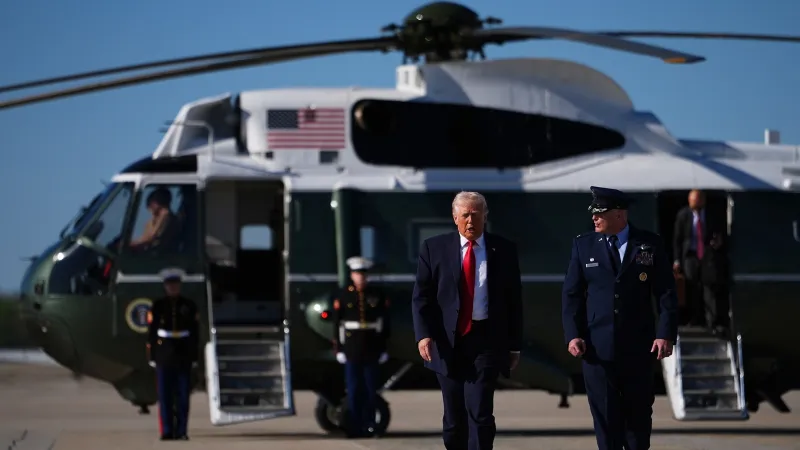
The strategic Strait of Hormuz, a vital chokepoint for global oil supply, has once again become a focal point of escalating tensions between Iran and the United States. Following President Donald Trump's order to blockade the strait, Iran's Islamic Revolutionary Guard Corps (IRGC) issued a stern warning to its "enemies," characterizing any aggression as a "deadly vortex." This exchange of threats underscores the high stakes involved in controlling this critical maritime passage, through which a significant portion of the world's oil production transits daily.
Iran's assertion of "full control" over the Strait of Hormuz, coupled with its proposal to impose tolls, signals a defiant stance against potential US actions. This move can be interpreted as an attempt to assert sovereignty and leverage its geographical advantage in the face of perceived threats. The IRGC's warning is a clear indication of Iran's readiness to retaliate against any perceived hostile act, hinting at the potential for military confrontation.
The US deployment of Navy ships in the region is a direct response to Iran's assertive posture and its past actions, including the seizure of oil tankers and the harassment of commercial vessels. The US objective is to ensure freedom of navigation and the uninterrupted flow of oil through the strait, safeguarding the interests of its allies and the global economy. The presence of US naval forces is intended to deter Iranian provocations and maintain stability in this volatile region.
The global significance of the Strait of Hormuz cannot be overstated. It serves as the primary conduit for oil exports from Saudi Arabia, Iran, Iraq, Kuwait, and the United Arab Emirates, all of which are major oil-producing nations. Any disruption to shipping traffic in the strait could have severe repercussions on global energy markets, leading to price spikes and supply shortages. The international community has a vested interest in ensuring the free and safe passage of vessels through this waterway.
The current standoff highlights the precarious balance of power in the Persian Gulf and the potential for miscalculation to trigger a wider conflict. The rhetoric from both sides suggests a willingness to escalate, raising concerns about the de-escalation mechanisms and the diplomatic channels available to prevent a full-blown crisis. The world watches anxiously as the situation unfolds, hoping for a peaceful resolution that avoids a "deadly vortex" for all involved.
Iran's IRGC warns 'enemies' of 'deadly vortex' after Trump orders Strait of Hormuz blockade
Admin
Apr 13, 2026
1 Views
2 min read
Source:
The Indian Express