Machine Learning Can Improve the Use of Atmospheric Observations in the Tropics
Admin
Apr 15, 2026
2 Views
2 min read
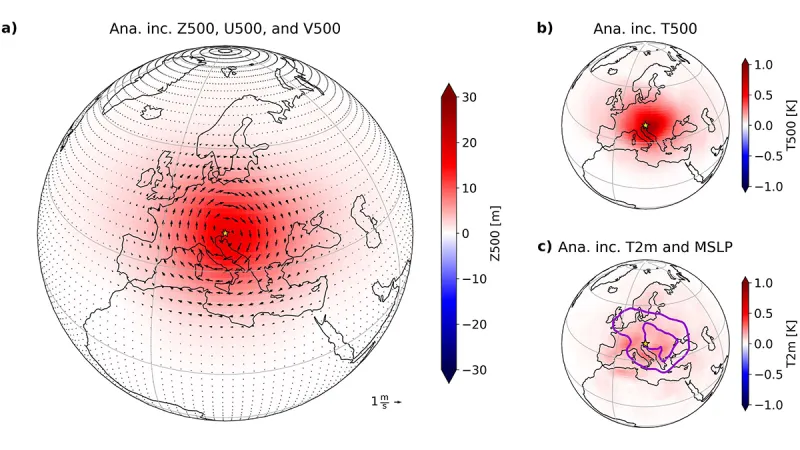
In a significant stride for atmospheric science and climate modeling, researchers have introduced a groundbreaking machine learning-based technique designed to optimize the use of atmospheric observations, particularly in the tropics. This innovative approach addresses a long-standing challenge: effectively utilizing observational data to understand and predict weather and climate patterns in regions where direct measurements can be sparse or less reliable. The developed machine learning model demonstrates a remarkable ability to infer unobserved atmospheric state variables – crucial elements like temperature, humidity, and wind speed at various altitudes – by learning complex relationships from available observational data. What sets this technique apart is its equal efficacy in both the midlatitudes and the tropics. Historically, atmospheric models and data assimilation techniques have often performed better in midlatitude regions due to denser observation networks and more established theoretical frameworks. The tropics, however, present unique challenges, including vast oceanic expanses with limited ground-based stations and complex convective processes that are difficult to capture with traditional methods. This new machine learning approach, by learning intricate patterns and correlations directly from data, bypasses some of these limitations. It can effectively 'fill in the gaps' in observational coverage, providing a more complete and accurate picture of the atmospheric state. The implications of this advancement are substantial for a variety of applications. Improved understanding of tropical atmospheric dynamics is critical for enhancing weather forecasts, from short-term predictions of severe storms to long-term seasonal outlooks. This is particularly important given the tropics' role in driving global weather patterns and their vulnerability to climate change impacts, such as increased frequency and intensity of extreme weather events. Furthermore, more accurate atmospheric data assimilation is fundamental for improving climate models. These models are essential tools for understanding past climate change, projecting future scenarios, and informing policy decisions aimed at mitigating and adapting to climate change. The ability of machine learning to process large volumes of complex data and identify subtle patterns makes it an ideal tool for tackling these challenges. This research not only represents a methodological advancement but also opens up new avenues for interdisciplinary collaboration between atmospheric scientists and machine learning experts, promising further innovations in the field.
Source:
eos.org