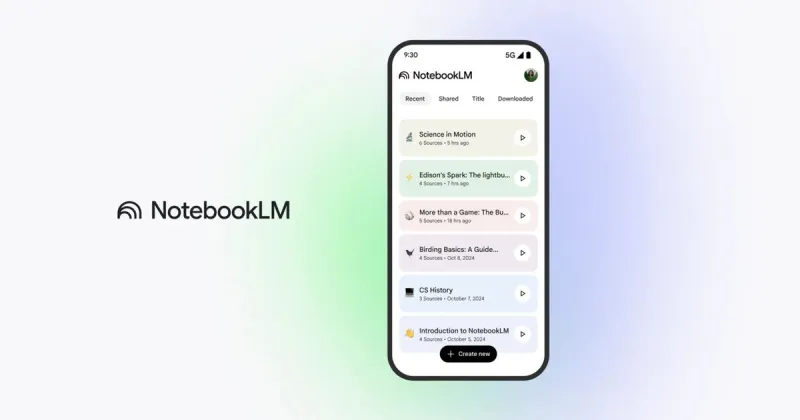
In an effort to streamline the research process for students, writers, and academics, Google has introduced a significant enhancement to its AI-powered note-taking tool, NotebookLM. The latest update brings an automated system for organizing research sources, a feature that promises to save users considerable time and reduce the cognitive load associated with managing multiple references.
The new functionality focuses on automatic source labeling and categorization. Previously, users of NotebookLM would have to manually input and organize their sources, a tedious task that often led to inconsistencies or errors. Now, once a user has accumulated five or more sources within a single NotebookLM notebook, the system will intelligently analyze these sources and automatically assign labels and categories. This means that documents, web pages, or any other form of reference material uploaded to NotebookLM will be processed by the AI to identify key information and group them logically.
This automation is a critical step towards making NotebookLM a more robust and user-friendly research assistant. By handling the often-dreaded task of source management, the tool allows users to focus on what truly matters: synthesizing information, developing arguments, and generating insights. The ability to quickly access and understand the origin of information is paramount in academic and professional research, and this feature directly addresses that need.
Google's integration of AI into productivity tools is becoming increasingly sophisticated. NotebookLM, which leverages large language models, is designed to help users understand complex documents, summarize key points, and generate new content based on their research. The addition of automatic source organization further enhances its utility by providing a structured foundation for all the information being processed.
For students working on essays, theses, or dissertations, this feature could be a game-changer. Keeping track of dozens, if not hundreds, of sources can be overwhelming. The automated system will not only help maintain order but also facilitate easier citation management and prevent accidental plagiarism. Similarly, journalists and researchers who deal with extensive datasets or a multitude of interview transcripts will find this feature invaluable.
The activation threshold of five sources is a sensible choice, ensuring that the AI has enough context to perform accurate categorization. It prevents the system from making premature or potentially inaccurate classifications when only a few sources are present. As NotebookLM continues to evolve, it's clear that Google is committed to building a powerful suite of AI tools that can genuinely assist users in their intellectual endeavors, making complex tasks more manageable and accessible.
NotebookLM can now automatically organize your research sources for you
Admin
2 Views
3 min read
Source:
Digital Trends