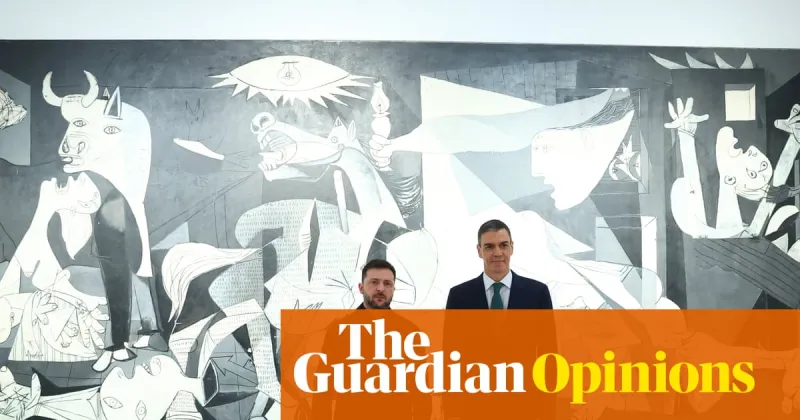
Pablo Picasso's monumental painting, "Guernica," a searing indictment of the brutality of war, has once again found itself at the center of a political storm in Spain, a nation still grappling with its complex history. The 1937 masterpiece, created in response to the devastating bombing of Guernica during the Spanish Civil War, was brought to Madrid 40 years ago, ending a long exile in New York during the Franco dictatorship. Its return was a moment of national reconciliation and a symbol of Spain's democratic resurgence. However, according to Spanish journalist María Ramírez, the painting is now being drawn into contemporary partisan squabbles, a fate that diminishes its universal message.
Ramírez argues that "Guernica" transcends political divisions. It is not merely a depiction of a specific historical event but a profound and timeless representation of the suffering inflicted by conflict on innocent civilians. Its power lies in its ability to evoke empathy and horror, serving as a stark reminder of humanity's capacity for destruction. To subject such an artwork to the ebb and flow of day-to-day political maneuvering is, in her view, a disservice to its artistic and humanitarian significance. The painting's journey from a symbol of protest against fascism to a national treasure has been fraught with political undertones, but its core message of peace and the condemnation of violence should remain sacrosanct.
The current political climate in Spain, characterized by a fragmented parliament and intense ideological debates, has unfortunately provided fertile ground for "Guernica" to become a pawn in these disputes. Different political factions may seek to associate themselves with the painting's anti-war sentiment for their own gain, or conversely, to distance themselves from it if it aligns with opposing ideologies. This politicization risks diluting the painting's universal appeal and its ability to unite people across the political spectrum in a shared understanding of war's devastating consequences. Ramírez's plea is for "Guernica" to be recognized for what it truly is: an emblem of human suffering that demands reflection and a commitment to peace, rather than a tool for partisan advantage. Its place should be as a unifying force, a testament to the enduring power of art to speak truth to power and to remind us of the essential values that should guide our societies.
Picasso’s Guernica is the ultimate emblem of the horrors of war. It has no place in Spain’s partisan squabbles
Admin
2 Views
2 min read
Source:
The Guardian