The past, present and future of de novo protein design
Admin
2 Views
2 min read
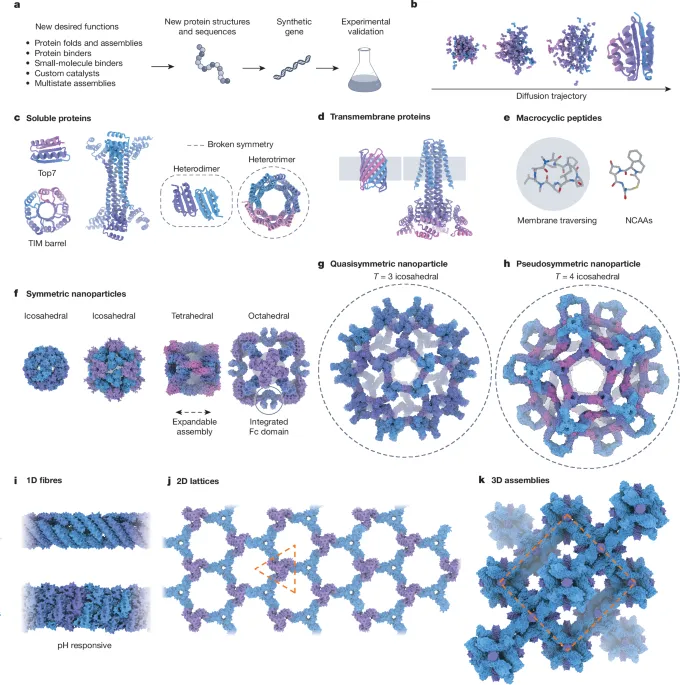
The field of de novo protein design is undergoing a significant transformation, moving from traditional random selection methods to sophisticated computational design approaches powered by deep learning. This paradigm shift is enabling scientists to engineer proteins with unprecedented precision and functionality, opening doors to a wide array of applications in medicine, technology, and sustainability. Historically, protein engineering relied on modifying existing proteins or screening vast libraries for desired traits. However, the advent of advanced algorithms and increased computational power has revolutionized this process. Researchers can now design entirely new protein structures, assemblies, and binders from scratch, purely through computational modeling. Current advancements highlight the growing success rates and activities of these designed proteins. While challenges remain, particularly in designing proteins for reactions with high energy barriers or creating intricate nanomachines that integrate binding, conformational change, and catalysis, the fundamental hurdles of designing new protein structures are nearing resolution. The key questions are evolving from 'how to design' to 'what to design,' reflecting the expanding possibilities. Open-source methodologies like RFdiffusion and ProteinMPNN, coupled with protein structure prediction tools, are empowering biochemists and molecular biologists to explore a broader spectrum of potential applications. Significant progress has also been made in designing small-molecule target binders, enzymes with novel functions, and complex multistate protein systems. Looking ahead, the next five to ten years promise the development of highly sophisticated protein nanomachines and materials. These engineered entities will possess functionalities that far exceed those found in nature, addressing critical needs across diverse sectors. The review of de novo protein design underscores these methodological advances, current challenges, and the exciting future applications that lie ahead, marking a new era in our ability to harness the power of proteins for human benefit.
Source:
Nature