In the ever-evolving landscape of smartphone technology, the quest for seamless integration and enhanced user experience is relentless. One of the most significant advancements in recent years has been the introduction of under-display cameras, allowing for truly edge-to-edge displays without notches or punch-holes. However, integrating advanced biometric authentication systems like Face ID into these designs has presented a considerable challenge. Traditionally, Face ID relies on a complex array of sensors, including an infrared camera and dot projector, which require a clear line of sight. This has often meant compromising on the display's aesthetic by incorporating cutouts or leaving bezels.
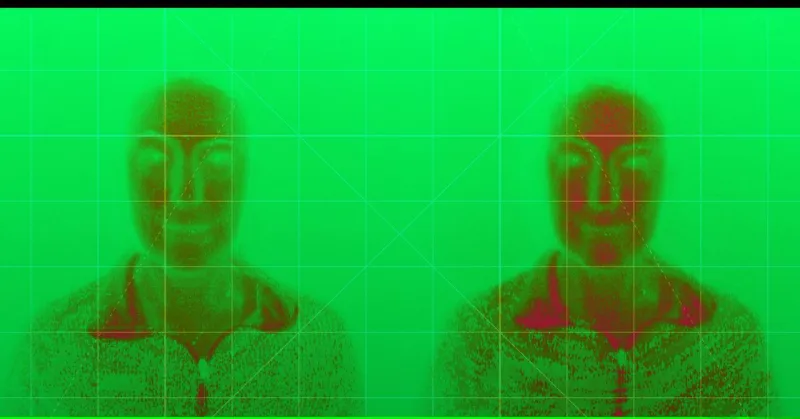
Enter Metalenz, a company that appears to have cracked the code. Their innovative Polar ID technology promises to make Face ID, or similar facial recognition systems, invisible. The key innovation lies in Metalenz's proprietary optical technology, which utilizes polarization to capture detailed 3D information about a user's face. Unlike conventional cameras that rely on visible light, Polar ID works by analyzing how light reflects off the face in different polarization states. This allows it to gather depth information and create a unique facial map, even when the camera sensor is physically located beneath the display panel.
This breakthrough has significant implications. For smartphone manufacturers, it means the potential to deliver a truly uninterrupted display experience without sacrificing the security and convenience of facial recognition. Devices could feature cleaner designs, with no visible sensors or cutouts interrupting the screen. For users, it translates to a more immersive visual experience and the continued ability to unlock their phones and authorize payments with a simple glance.
The implications extend beyond just smartphones. This technology could also find applications in augmented reality (AR) and virtual reality (VR) headsets, where the integration of accurate depth-sensing capabilities is crucial for realistic experiences. Furthermore, it could be utilized in other areas requiring secure and discreet biometric authentication, such as smart home devices or automotive interiors. Metalenz's achievement is a testament to the power of advanced optics and its potential to redefine how we interact with our technology, paving the way for a future where sophisticated features are seamlessly woven into the fabric of our devices.
This Company Has Figured Out a Way to Make Face ID Invisible
Admin
1 Views
2 min read
Source:
WIRED