What issues will dominate Trump-Xi summit, and who has the upper hand?
Admin
2 Views
2 min read
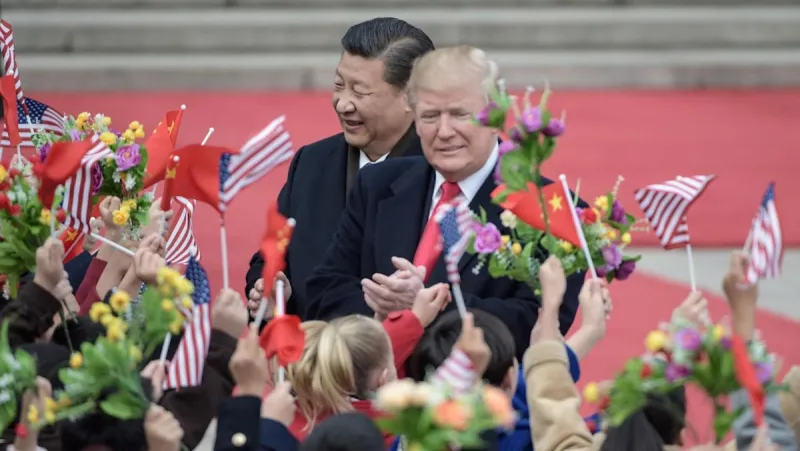
The forthcoming summit between Chinese President Xi Jinping and former US President Donald Trump in Beijing is poised to be a pivotal event, with analysts closely examining the potential issues that will dominate their discussions and assessing who might hold the 'upper hand.' The relationship between the United States and China has been characterized by significant friction in recent years, encompassing trade imbalances, technological competition, human rights concerns, and geopolitical rivalries. Expectations for a comprehensive 'reset' in these complex ties are reportedly tempered, suggesting that participants are approaching the summit with a degree of pragmatism rather than grand optimism. The core of the discussions is likely to revolve around managing these existing tensions and exploring avenues for de-escalation, rather than a fundamental overhaul of the relationship. Key issues that could dominate the agenda include the ongoing trade disputes, the semiconductor war, and regional security concerns, particularly regarding Taiwan and the South China Sea. The question of who has the 'upper hand' is multifaceted. From an economic perspective, China's continued growth and its increasing influence in global supply chains suggest a strong negotiating position. However, the United States, despite its internal political divisions, still possesses significant economic and military power, as well as alliances that provide leverage. The real test, as analysts point out, will be the summit's ability to produce 'durable mechanisms.' This implies a focus on establishing concrete agreements, protocols, or frameworks that can facilitate ongoing dialogue, manage disagreements constructively, and prevent further deterioration of the relationship. Without such mechanisms, any temporary thaw in relations could prove superficial and short-lived. The summit's success will be measured not just by the rhetoric exchanged but by the tangible outcomes and the establishment of structures that can foster stability and predictability in one of the world's most critical bilateral relationships. The outcome could have profound implications for global economic stability, international security, and the future of multilateralism.
Source:
CNA