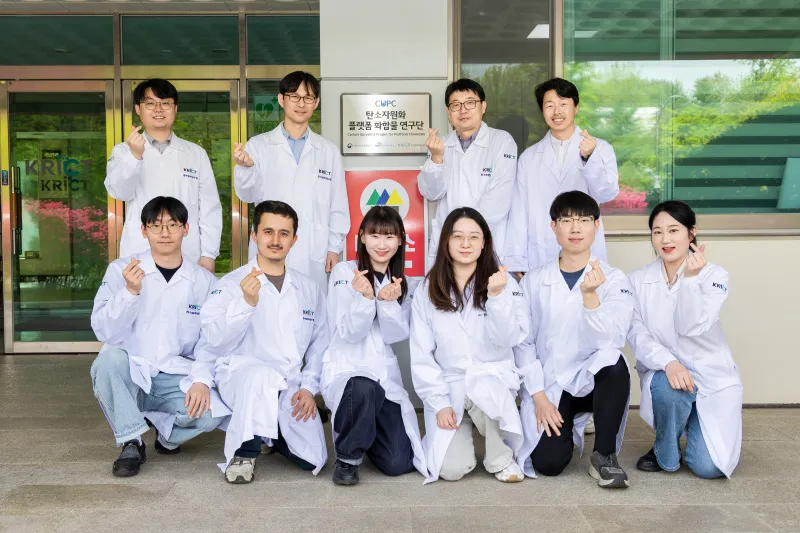
In a significant stride towards sustainable fuel production and carbon capture utilization, the Korea Research Institute of Chemical Technology (KRICT) has unveiled a groundbreaking technology capable of directly converting carbon dioxide (CO₂) into valuable liquid hydrocarbons, specifically gasoline and naphtha. This innovative process has achieved a pilot-scale production rate of 50 kilograms per day, marking a crucial step in the commercialization of CO₂-based fuel synthesis.
The core of KRICT's achievement lies in its advanced catalytic system. While the specifics of the catalyst are proprietary, it is understood to facilitate a series of chemical reactions that transform captured CO₂ and hydrogen into the desired hydrocarbon chains. This direct conversion bypasses the need for intermediate steps often associated with CO₂ utilization, thereby improving efficiency and reducing overall costs. The ability to produce gasoline and naphtha, which are fundamental components of the transportation fuel sector and petrochemical industry, respectively, makes this technology particularly impactful.
This development holds immense promise for addressing two pressing global challenges: climate change and energy security. By capturing CO₂ emissions from industrial sources – such as power plants and manufacturing facilities – and converting them into usable fuels, KRICT's technology offers a dual benefit. It not only reduces the amount of greenhouse gases accumulating in the atmosphere but also provides a renewable source of energy, lessening reliance on fossil fuels. The concept of a circular carbon economy, where carbon is recycled rather than released, moves closer to reality with such innovations.
The pilot-scale production of 50 kg per day, while modest, is a critical proof-of-concept. It demonstrates the technical feasibility and scalability of the process. The next phase will likely involve scaling up the production capacity to industrial levels, which will require further engineering, optimization, and investment. The economic viability of this technology will depend on factors such as the cost of CO₂ capture, the efficiency of the conversion process, and the market price of the produced fuels.
Beyond the immediate implications for fuel production, this research could spur further advancements in related fields. The development of highly efficient and selective catalysts for CO₂ conversion is a key area of ongoing research worldwide. KRICT's success could inspire new catalyst designs and process methodologies, accelerating the pace of innovation in green chemistry and carbon utilization technologies. The potential applications are vast, ranging from synthetic fuels for aviation and shipping to the production of chemicals and materials currently derived from petroleum. The successful demonstration by KRICT is a beacon of hope for a more sustainable future, showcasing how scientific ingenuity can tackle some of the world's most formidable environmental and energy challenges.
KRICT Demonstrates Direct CO2-to-Gasoline and Naphtha Production at 50 kg per Day
Admin
2 Views
3 min read
Source:
Newswise